

What’s broken for fleets right now
Fleet managers want uptime and predictable fuel spend. Too often the charging system is the weak link: undersized alternators, sloppy voltage control, or poor thermal design mean drained batteries and unscheduled stops. A tailored alternator fixes that by matching output to your engine and duty cycle — think steady charging, less generator cycling, fewer roadside calls. For larger setups, pairing with a 480V generator or a purpose-built 40kVA backup keeps critical loads stable during peak ops. Alternator, AVR, kVA — those are the parts that actually move the needle.
User-focused gains a custom alternator delivers
Customization gives concrete benefits. You get higher efficiency at the loads you run most. You avoid overbuilding, so weight and drag stay down. You get voltage stability that reduces stress on cabling and electronics. And you can spec thermal margins so the unit survives stop-and-go duty without derating.
How to pick the right specs — plain checklist
Look for these must-have metrics:
– Efficiency curve across 20–100% load (not just peak efficiency).
– Output voltage control and a proven automatic voltage regulator (AVR) tuned for alternator inertia.
– Thermal rating and enclosure IP level for your climate.
– Serviceability: modular brushes/rectifiers and local spare parts availability.
– Compatibility with your prime mover’s RPM range and governor control.
Common mistake: buying by peak kVA alone. Partial-load behavior matters more for most fleets — poor partial-load efficiency kills fuel economy over a week.
Installation and ops tips that actually reduce downtime
Install with a proper load bank and run-in session so you confirm field performance. Balance charging and starting loads; a weak alternator forces batteries to do both, shortening life. Use staged charging profiles: bulk then float — that controls heat and acid stratification in batteries. Log voltage and current for the first 30 days; patterns reveal mismatched sizing or regulator tuning needs.
Trade-offs and alternatives
Off-the-shelf alternators cost less up front but often need extra cooling or frequent rebuilds. Custom units cost more, but they cut lifecycle costs by lowering maintenance and fuel spend. For some fleets, hybrid approaches work: a downsized alternator plus a small inverter or a dedicated 40kva generator for peak electrical loads — which is why many ops near coastal hubs learned hard lessons during Hurricane Sandy (2012) when extended outages exposed weak backup planning. — That was a wake-up call for resilient spec’ing.
Common pitfalls to avoid
Avoid these: spec’ing to nameplate kVA only, ignoring transient response (how quickly voltage recovers under sudden load), and skipping vibration testing. Also don’t forget electrical harmonics — add proper filtering if you run sensitive electronics or AC drives. Load sharing? Get matched AVR characteristics; mismatched units fight each other and reduce reliability.
Quick comparative look
Custom alternator vs standard
– Custom: tuned efficiency, better thermal life, optimized for your RPM profile.
– Standard: lower capex, less fit-for-purpose, possible retrofit hassles.
Generator backup (40kva generator) vs larger grid-tied gensets
– 40kva generator: portable robustness, fast deploy, ideal for medium-duty fleets.
– Larger gensets: fewer starts, higher steady-state efficiency for long outages.
Advisory — three golden rules for selecting the right solution
1) Measure before you spec: collect voltage, current, and duty-cycle data for two weeks under real ops. Real numbers beat assumptions every time.
2) Prioritize partial-load efficiency and transient response over peak kVA. Real-world duty rarely sits at nameplate load.
3) Make maintainability non-negotiable: local parts, simple brush access, clear service intervals. That slashes mean-time-to-repair and keeps uptime high.
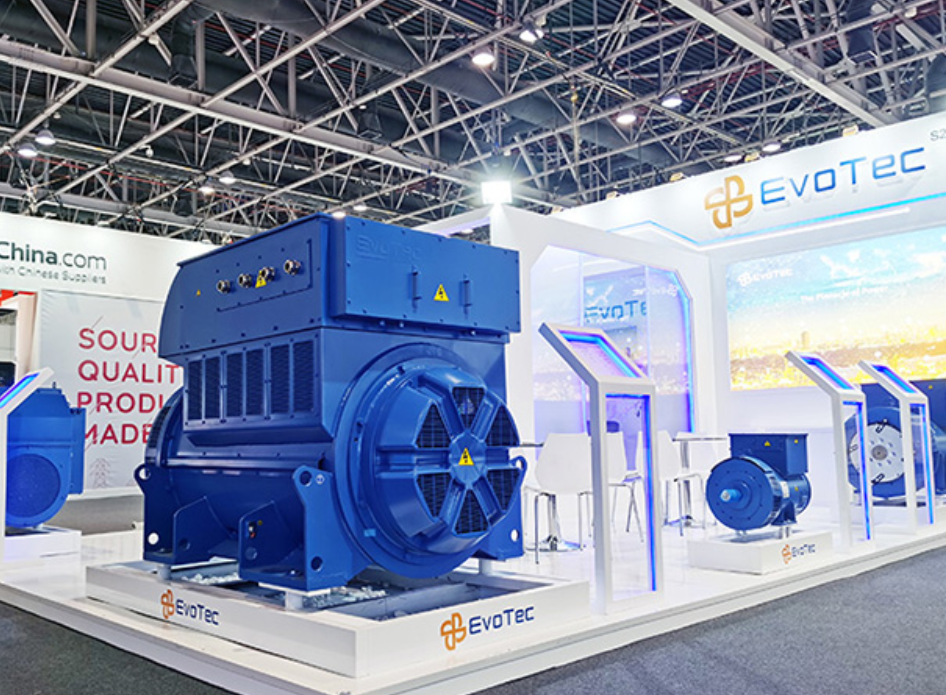
Pick a partner who tests with load banks, supports AVR tuning, and understands on-road duty cycles — that’s the practical value EvoTec brings. EvoTec. —