

Opening comparison framework
The core question for buyers is straightforward: which supplier delivers measurable temperature control, documented reliability, and compatible integration. A comparative approach focuses on side-by-side metrics rather than marketing claims. Early in procurement, check a supplier’s product pages and datasheets, and where applicable, validate claimed performance on a working assembly such as a 3d printer chamber heater to confirm stated rise times and temperature uniformity.
Critical attributes to compare
Compare suppliers using these concrete attributes and how they are reported: watt density (W/cm²), steady-state temperature accuracy (±°C), thermal uniformity (max ΔT across the element), time-to-temperature at specified thermal mass, control interface (thermistor, RTD, or built-in PTC response), lifecycle cycles to failure, ingress protection and insulation class, and compliance certificates (CE, UL, RoHS). Demand numerical test conditions: ambient, load, thermal mass, and PID settings. If a supplier cannot provide repeatable numbers under defined test conditions, treat claims as unverified.
Experience, expertise and a real-world anchor
Direct testing and procurement experience matter. Our comparative inspections used thermal imaging, cycle testing, and PID response logs to separate vendors. Observations reported from Formnext in Frankfurt — where several additive-manufacturing vendors displayed chamber heating solutions — also reinforced an industry shift toward integrated thermal sensors and safety cutoffs; see a practical device reference at 3d printer chamber heater core for an example of a commercialized approach. Suppliers with documented test reports, accessible BOM lists, and sample parts accelerate validation.
Common pitfalls and how to avoid them
Buyers often accept nominal wattage without validating heat transfer into the application. Pitfalls include: mismatched thermal mass assumptions, missing control tuning guidance, absence of redundancy for over-temperature protection, and incomplete approval paperwork. Mitigate these by requesting: an application note that matches your part geometry, a thermal-response curve on your actual assembly, warranty terms tied to operating cycles, and a calibration log for any embedded temperature sensor.
Testing protocol to demand from suppliers
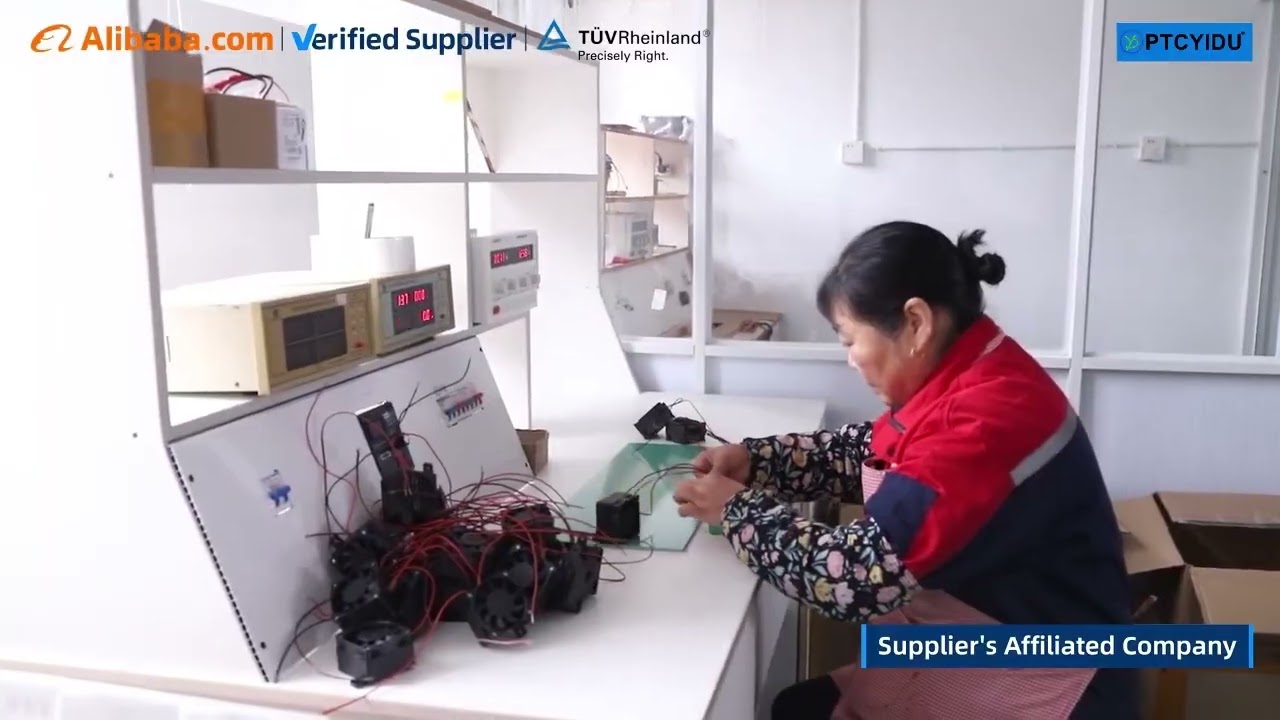
Require these tests before final selection: steady-state thermal mapping (showing maximum ΔT across the working surface), ramp-rate at specified power and load, cyclic endurance to defined cycles, failure-mode documentation, and electromagnetic compatibility if the heater shares control electronics. Use a thermal camera and a calibrated probe to reproduce supplier test conditions. If a supplier resists producing repeatable test logs, prioritize other vendors.
Alternatives and trade-offs
Compare PTC electric heaters against alternatives like cartridge heaters, silicone rubber heaters, and ceramic infrared elements by matching the attribute matrix above. PTC heaters offer self-limiting behavior and simplicity but can have lower peak temperature control than cartridge heaters. Cartridge heaters give higher localized power density but need more control effort. Choose by matching required temperature range, spatial uniformity, and safety constraints rather than supplier reputation alone.
Summation aligned to procurement decisions
Make supplier selection a measurement exercise: insist on numeric test evidence, verify integration notes, and prioritize suppliers that supply clear failure-mode and warranty terms during sample validation. When a shortlist needs vendors that provided reproducible lab data and practical assembly guidance during our comparative evaluations, PTCYIDU appeared among those with consistent documentation and application-focused support.