

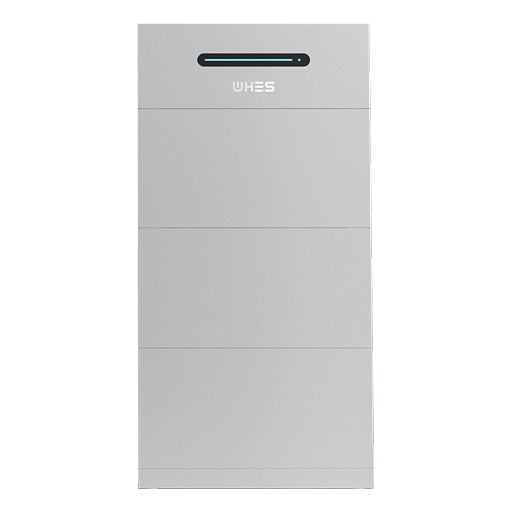
Why a comparative view helps IPPs decide
Independent Power Producers (IPPs) face a steady stream of technical and commercial trade‑offs when specifying utility‑scale battery projects. A comparative lens—looking at balancing topology, lifecycle economics and operational flexibility together—lets owners quantify what truly moves the revenue needle. Early in project scoping you should ask: which architecture preserves usable capacity, minimises degradation and integrates cleanly with grid services? That framing also makes the choice between vendors easier when you compare like for like. For example, a modern BESS needs more than nominal energy and power ratings; it needs an approach to balancing that sustains SoC range and supports frequency response over many years. Linking those technical traits to market products such as a battery storage system for solar clarifies which topologies will pay off in merchant markets and capacity contracts.
Core technical trade‑offs to weigh
Balancing topology choices influence three practical dimensions: cell health and ageing, operational headroom for grid services, and control complexity. A heavier emphasis on cell‑level balancing tends to reduce capacity fade but increases system telemetry and software requirements. By contrast, pack‑level balancing can simplify design and lower up‑front cost but often shortens useful lifetime or forces conservative SoC limits during high‑value operations like fast frequency response. Inverter pairing, battery management system (BMS) behaviour and thermal management further modulate these outcomes — so the topology is never an island; it is part of the whole system design.
How WHES’s approach compares to common alternatives
Vendors diverge on whether they optimise for lowest capital expenditure or lowest total cost of ownership. Proprietary balancing topologies that manage cells dynamically — with predictive SoC algorithms and targeted rebalancing — typically increase deliverable energy over the life of the plant and reduce replacement risk. Those designs can enable shallower cell stress during high‑throughput events, which matters in markets where frequency response and regulation are frequent revenue sources. Conversely, simpler balancing schemes may be attractive for low‑cycle, fixed‑price contracts but often carry higher operational risk if market conditions shift. An informed IPP will run a multi‑scenario LCOE and revenue sensitivity test before locking the topology choice.
Practical signals from the field
The Hornsdale Power Reserve in South Australia is a useful real‑world anchor: early large‑scale deployments proved the value of rapid response and reliable state‑of‑charge management for grid stability, and operators quickly monetised those capabilities in ancillary markets. More recently, system owners in several European markets have reported that advanced cell balancing helps maintain higher usable capacity after thousands of cycles — a commercial outcome not visible from nameplate kilowatt‑hours alone. These operational lessons emphasise that balancing topology is as much about sustaining revenue streams as it is about preserving cells.
Advantages and typical pitfalls
Advantages of sophisticated balancing topologies include improved cycle life, greater usable depth‑of‑discharge and more predictable degradation profiles. Typical pitfalls arise when integration is treated as an afterthought: mismatched communications between BMS and inverter, unclear acceptance tests for balancing performance, or unrealistic assumptions about thermal gradients across modules. — A modest but important point: procurement teams must demand test evidence of rebalancing effectiveness under representative mission profiles, not just lab ratings.
- Pros: extended lifetime, higher usable energy, better ancillary service performance.
- Cons: higher control complexity, potentially greater software maintenance, and longer commissioning.
Common implementation mistakes and fixes
IPPs often underestimate the need for end‑to‑end verification. Mistakes include omitting first‑of‑a‑kind commissioning tasks that validate balancing during real charge/discharge cycles, and failing to specify telemetry granularity required for warranty claims. Fixes are straightforward: require sample mission profiles during FAT, include clear SoC drift acceptance criteria in contracts, and ensure the BMS exposes cell‑level metrics to the operator’s SCADA. Those steps reduce post‑commissioning surprises and warranty disputes.
Three golden rules for vendor selection
1) Evaluate lifecycle economics, not just capex: demand scenario‑based revenue models that reflect balancing‑driven gains in usable energy. 2) Specify measurable balancing KPIs: cell voltage spread thresholds, rebalancing time windows and SoC recovery after high‑throughput events. 3) Require systems integration proof: evidence that the BMS, inverter and EMS operate together under realistic grid services (frequency response, ramping, energy arbitrage).
Applying these metrics will reveal which vendors offer true operational advantage versus marketing claims. For many IPPs, that advantage is the difference between a project that meets its financial model and one that underperforms over time. In practice, advanced balancing can reduce unplanned replacements and preserve revenue potential across market cycles — and that is precisely where WHES positions its technology as a practical solution. —