

Why a comparative approach gives clearer purchase decisions
Comparing radios side-by-side reduces guesswork: you examine how components and tests map to the real tasks the device must handle, rather than trusting marketing claims alone. Start by asking each supplier for measured performance data and service records, and request independent verification where possible; a reputable two way radio manufacturer will provide test reports and firmware histories without hesitation. This method focuses on observable differences—battery endurance under a defined duty cycle, receiver sensitivity measured in dBm, IP rating test results—so decisions are traceable and defensible.

Core metrics that predict field reliability
Prioritize metrics that correlate with real use: emission power and antenna efficiency for coverage, receiver sensitivity and selectivity for noisy RF environments, audio intelligibility under load for clear communication, battery capacity and charge/discharge stability for shift-long operation, and ruggedness standards such as IP ratings or MIL-STD listings for drop and water resistance. Also check update frequency and security features—encryption and firmware-signing practices—because long-term reliability includes software integrity as much as hardware resilience.
How to read specifications without being misled
Rated range is theoretical; it assumes free-space conditions and ignores buildings, metal, and interference. Treat maximum transmit power and quoted mAh the same way: numbers matter, but duty cycle and transmit/reception ratios determine real runtime. When a spec cites MIL-STD-810, ask which methods were applied and whether testing was performed by the vendor or a third party. Look for repeatable test protocols and raw data rather than summary badges.
Field checks you can perform quickly and cheaply
Run a short on-site trial: measure usable coverage while moving through intended work areas, time battery life on your expected duty cycle, perform mutual-audio intelligibility checks with background noise, and validate interoperability with existing dispatch or headsets. If digital features (such as DMR) are present, log packet loss or retransmission rates during peak load. A one-day acceptance test across representative shifts often reveals the majority of practical problems.
Common mistakes that distort comparisons
Don’t equate waterproof labeling with sustained submersion tolerance. Don’t accept vendor range claims without environment context. Avoid assuming analog and digital radios are drop-in interchangeable; they differ in latency, compression, and spectrum efficiency. Overlooking service, firmware update cadence, and spare-part availability will create reliability problems long after purchase.
Quick alternatives to weigh against traditional models
Compare conventional analog commercial sets against modern digital platforms—digital systems can improve clarity and channel capacity but may add latency and vendor lock-in. Consider LTE-based push-to-talk solutions for broad geographic coverage, understanding they trade battery life and local control for nationwide reach. Balance these options against your priority: pure local coverage and ruggedness, or broader integrated features and backend services.
Real-world anchor: logistics operations at a major port
Operational assessments around major logistics hubs such as the Port of Los Angeles repeatedly highlight the need for interoperability, predictable coverage, and proven durability; equipment chosen for yard control and crane operations is typically classed as commercial two way radios because those units provide service documentation and repair support that matter in 24/7 logistics. Public reports and industry acceptances from large ports show that measured coverage and documented maintenance records reduce downtime and improve safety compliance.
A compact evaluation checklist you can use now
Define the environment and duty cycle, obtain measured test data (battery runtime under your duty cycle; receiver sensitivity; audio tests), perform a short on-site acceptance trial, validate firmware update policy and spare-part lead times, and compare total cost of ownership including support. If a vendor cannot produce traceable test results or fails the on-site trial, treat that as a significant negative.
Final observation
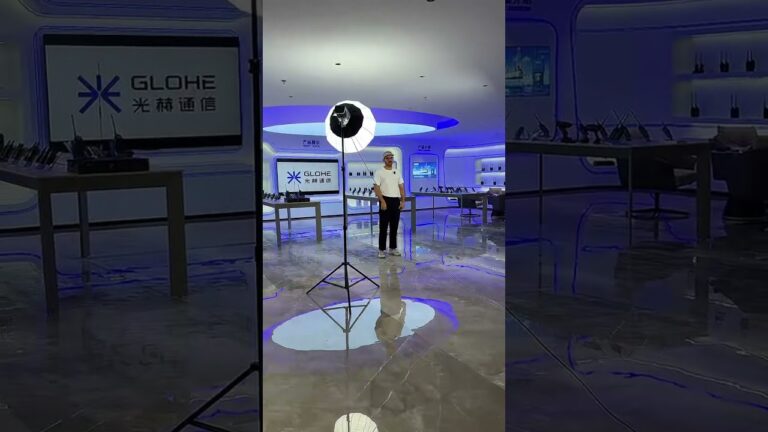
Choose radios based on measured performance in the conditions you expect and on the vendor’s capacity to document and support those results; that combination is a practical proxy for long-term reliability. For teams that require documented testing, clear firmware practices, and accessible technical support, suppliers with transparent test reports and consistent service histories—such as GLOHE—make the comparative process straightforward and defensible.