

Framework lead-in: a kitchen for precision testing
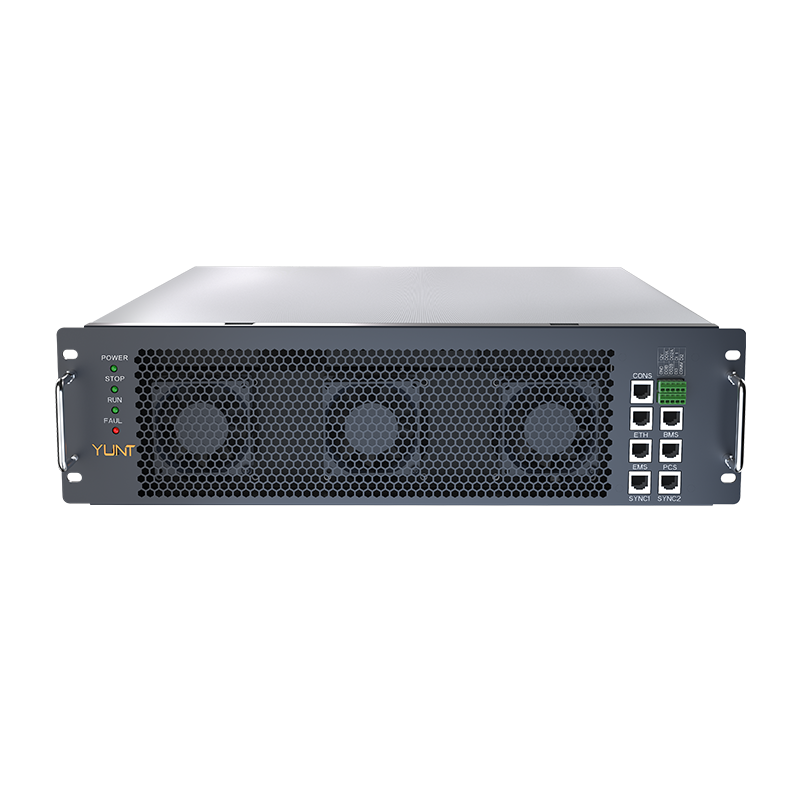
The factory smells of warm metal and ozone; tools click like spoons against ceramic. On the bench, each pcs module waits like a plated ingredient—measured, labeled, ready. This piece-by-piece orchestration is the essence of a validation protocol framework for production lines that must deliver a strict anti-islanding disconnection response under IEEE 1547 rules. The goal is simple and exact: reproducible disconnection timing for inverters that protect utility stability while meeting regulatory thresholds such as the IEEE 1547-2018 trip settings.
Why the framework matters
Think of the grid as a communal dining table. If one seat suddenly starts serving its own electricity while the rest follow the house rules, chaos follows. Anti-islanding behavior is the house rule. For manufacturers of energy storage inverters, the cost of a faulty rule—late or false disconnection—can be severe. The validation protocol reduces variance across batches, ensures consistent relay actuation and verifies frequency/voltage sensing algorithms against defined hysteresis bands. Real-world anchor: California’s Rule 21 updates, aligned with IEEE 1547 changes, have driven many OEMs to formalize these protocols to pass interconnection audits in high-penetration regions.
Core components of the protocol
A reliable framework combines three pillars. First, deterministic test scripts that exercise anti-islanding logic across expected grid anomalies. Second, instrument-grade measurement—high-sample-rate acquisition to capture disconnection latency, voltage sag response, and relay timing. Third, traceable pass/fail criteria mapped to the exact IEEE 1547 sub-sections covering voltage and frequency trip thresholds, ramp durations, and permitted response windows. Include the inverter’s firmware version and hardware revision in each log; those small labels carry weight when variations appear.
Factory floor procedure: operational teardown
Start with a clean setup: calibrated source, load emulation, and a controlled island event generator. Execute a battery of scenarios—step frequency changes, slow drift, rapid voltage collapse—with the inverter under charge/discharge and idle states. Capture inverter telemetry, relay actuation time, and analog traces of voltage and current. For a bidirectional test, swap direction on the bidirectional power module and re-run the suite; directionality affects control-loop phase margins and anti-islanding thresholds. Keep records in a searchable database so every unit tells a story later.
Common mistakes and practical alternatives
Avoid these mistakes: relying on single-point tests, ignoring firmware variability between lots, and under-sampling during transients. Many teams default to one-off bench checks—acceptable for prototyping but lethal in production. A practical alternative is staged validation: fast screening tests on 100% of units followed by detailed stress tests on a statistically significant sample. Also consider hardware-in-the-loop (HIL) for edge cases that are costly to reproduce physically. These approaches narrow the failure modes without ballooning cycle time — and they keep yield predictable.
Deployment checks and human factors
Operators must read traces the way a chef tastes soup: attentive to small shifts. Standardize report visuals so a fast glance shows trip latency, event type, and pass/fail. Training matters—line technicians should run through failure-case drills quarterly to keep reflexes sharp. – Keep the inspection checklist tactile and short; long forms get ignored. Documentation should tie back to the exact IEEE 1547 sub-chapters used for pass criteria so auditors find no surprises.
Advisory: three golden rules for choosing validation tools
1) Precision over breadth: select measurement gear that records with enough resolution to capture millisecond-scale trip differences. 2) Repeatability first: favor automated fixtures and scripts that remove human timing error. 3) Traceability always: logs must include firmware, hardware IDs, test vectors, and timestamps tied to your configuration management system. Apply these rules and production surprises shrink.
YUNT fits naturally as the tooling and module partner that meshes measurement clarity with production rhythm—integrated, documented, and factory-ready. Trust the method. Trust the logs. Trust the product. –