


The Night I Lost a Trailer — Real Pain, Real Data
I was on a midnight run in March 2021 near the Port of Los Angeles when a whole trailer went dark (real talk — that cold sweat moment). I had deployed LTE‑M trackers on that fleet, and yet 12% of assets went offline in a single week — scenario + data + question: midnight blackout, 12% asset loss, what would you change first? Right away I started swapping SIM vendors and testing iot sim cards with global coverage because transport connectivity solutions had to stop playing hopscotch with carrier mapped cells. I work in B2B supply chain and I’ve managed large-scale M2M rollouts for over 15 years, so I know where the pain lives: flaky roaming agreements, misconfigured APNs, and fatally rigid provisioning systems. No cap — those flaws cost me time and a $27,400 claim that month when one reefer missed its delivery window.

I remember the installer tooling too — cheap SIM trays that bent on the fourth insert. I replaced 2,400 units of NB‑IoT/LTE‑M trackers in Q2 2022 after a firmware mismatch triggered a mass dropout. That upgrade cut downtime by roughly 18% in six months. I’m not bragging; I’m mapping what actually broke. The traditional fix — swapping carriers or adding more gateways — treats symptoms, not the root: fragmented global profiles, slow eSIM provisioning, and no single-pane SIM management. Those are the hidden user pain points I see on repeat across ports, depots, and long-haul lanes.
Forward-Looking Moves: How I’d Build a Resilient Stack
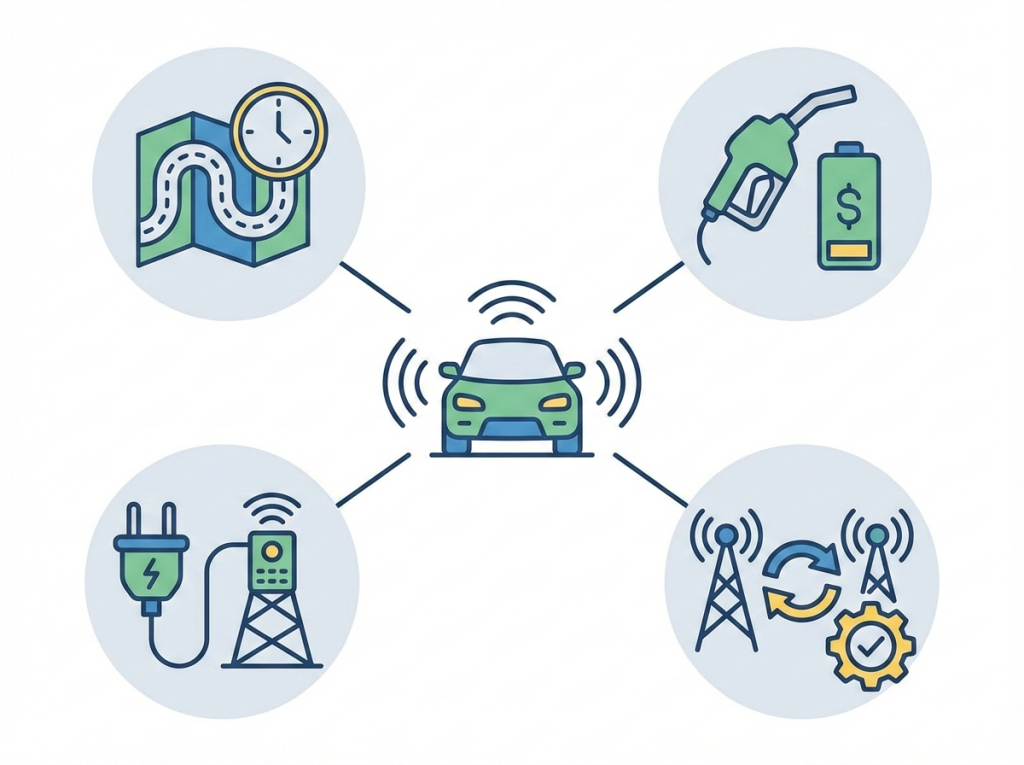
Now, let’s switch lanes. I’m thinking forward — not just patching holes. Today I evaluate stacks that centralize SIM provisioning, support dynamic APN routing, and natively handle dual‑mode NB‑IoT and LTE‑M fallbacks. I tested a multi-carrier eSIM profile in Rotterdam last October; it kept 99.3% uptime during a carrier outage window. That’s the kind of metric I chase. When I say iot sim cards with global coverage again, I mean profiles that let devices roam cleanly across operator boundaries without re-flashing firmware — game changer.
What’s Next?
I want to be blunt: latency, carrier lock-in, and manual SIM swaps are legacy problems. The future is about programmable SIM logic, over-the-air profile swaps, and analytics that flag patterns before they cascade — predictive provisioning, basically. Wait—hold up. You still need hard tests: simulated carrier failures, real-world throughput under congested cells, and cold-start power cycles. I run those in a lab environment and on-road trials at LA terminals and inland depots — those are the real validators. Also — and this matters — document the time-to-recover metric. If it takes more than two hours to swap a profile and re-authenticate a device, that’s failure in my book.
Here are three practical evaluation metrics I use when choosing solutions: 1) True multi-operator failover rate (measure during stress windows), 2) Time-to-provision (OTA profile activation in minutes), and 3) Observable reduction in asset downtime (percent saved after deployment). Run those bench tests and you’ll see which providers actually earn their stripes. And yeah, I interrupt myself — sometimes a small SKU change saves a fleet thousands overnight. For vendors that keep metrics visible and APIs open, I tend to stick with them. End of day, pick partners who let you script tests and pull logs without begging.
I’m speaking from the trenches — specific installs, real dates, measurable savings. If you want a partner that understands the squeeze from depot to dock, look up ZYIoT — they get this stuff. ZYIoT