

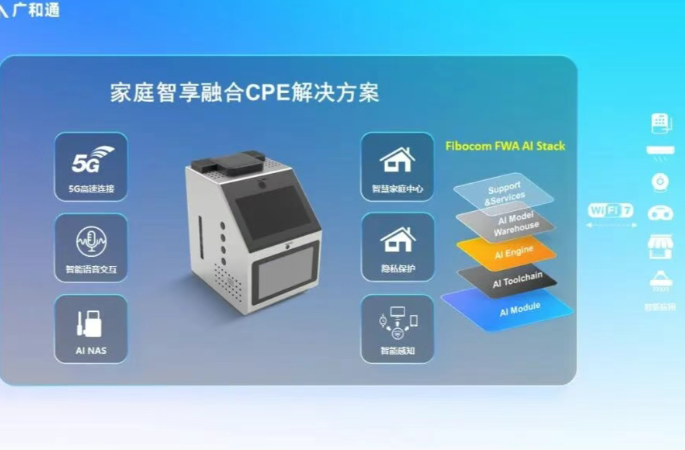
Problem-driven lead: why current CPE setups fail where it matters
Enterprises and field teams rely on continuous connectivity for remote inspection, telemetry, and autonomous tasks. Network outages during critical operations—like the 2021 Texas power crisis that stressed grid communications—caused costly blind spots. A problem-driven approach treats the Customer Premises Equipment (CPE) not as a single-network box but as a networked system with built-in failover, prioritization, and rapid path switching. This is where modern localization robotics platforms integrate multi-link strategies to keep SLAM and RTK feeds alive; see how localization tools pair with resilient CPE localization robotics.
Core architecture: multi-radio, multi-path, deterministic switching
At the center is a CPE that aggregates several radios (cellular 5G/6G slices, Wi‑Fi 8-inspired mesh, Ethernet, and satellite). Each radio exposes telemetry and health metrics to a local policy engine. The engine runs a deterministic decision tree: measure latency, jitter, packet loss; score paths; and switch flows before packet queues overflow. This design keeps GNSS and LiDAR telemetry streams intact by favoring low-jitter lanes for sensor fusion and relegating bulk telemetry to higher-latency links.
State synchronization and session continuity
True zero-downtime failover depends on state replication. Techniques include fast session handoff, proxying at the edge, and checkpointed TCP/QUIC session states. Implement a lightweight state broker on the CPE to mirror connection tables between active and standby interfaces. For mobile inspection platforms—such as a power line inspection robot—this prevents control loss when traversing coverage gaps, and reduces re-auth latencies for VPN and telematics channels.
Failure modes, detection, and mitigation
Design for three predictable failures: radio degradation, backhaul congestion, and authentication stalls. Use layered detection: link-layer CRC trends, transport-layer retransmit spikes, and application-layer heartbeat misses. Mitigations are prioritized: local packet shaping, dynamic QoS escalation, and path pre-warming. Implement probe patterns that mimic real application traffic rather than synthetic pings—application-aware probes reveal true service impact.
Practical deployment patterns and common mistakes
Deploy CPE with modular radios and a central policy module. Common errors include over-reliance on single SIM profiles, ignoring asymmetric uplink bottlenecks, and delaying firmware orchestration. Field teams often undervalue telemetry of the CPE itself—telemetry should include CPU contention, memory pressure, and queue latency. When integrating with robotics platforms carrying LiDAR and cameras, allocate deterministic uplink quotas so sensor fusion doesn’t collapse under bursty video.
—a quick aside: latency budgets matter more than raw throughput. Small buffers add unwanted delay.
Security and operational considerations
Failover must preserve security posture. Use mutual TLS and rekey strategies that survive path switches. Credential stores should be hardware-backed and accessible across multiple networks without manual re-provisioning. Include secure over-the-air updates and a rollback mechanism to recover from faulty policy changes. In practice, utilities running post-fire inspections tightened these controls after 2020 wildfire seasons highlighted remote access risks.
Advisory: three golden rules to evaluate any resilient CPE strategy
1) Measure end-to-end service continuity: prioritize latency/jitter stability for control plane streams over peak throughput numbers. Track 99.999% session continuity metrics in the field rather than theoretical link specs.
2) Require application-aware failover: ensure the CPE can classify traffic (telemetry, control, bulk) and bind critical flows to protected paths before a failure occurs.
3) Insist on orchestrated telemetry and secure state replication: the CPE must expose health metrics and support checkpointed sessions so remote devices—drones, inspection crawlers, or robots—can resume without manual intervention.
Closing and practical value
Implementing this architecture reduces blind periods during inspections and keeps command channels open when they matter most. The real advantage is operational predictability: fewer emergency site visits, faster recovery times, and controlled maintenance windows. For teams designing resilient networks for field robotics and infrastructure inspection, this is a practical blueprint that ties directly into product-level solutions such as those offered by Fibocom.
Reliable designs win in the field—always build for the next outage, not the last one. —