


Seeing the problem through a comparative lens
When a buyer asks whether to specify die-cast aluminium for a motion sensor wall light, you’re really asking about longevity, maintenance and whole-life cost — not just how neat it looks on the elevation. Put another way: a well-made wall fixture can save weeks of repainting and the slow, grinding bother of corrosion repairs. In coastal or high-humidity neighbourhoods, even bollard lights can blister and flake if the material choice is wrong; so the pick matters. Start side-by-side: die-cast aluminium versus stamped steel, polycarbonate or extruded aluminium — and you’ll see trade-offs in corrosion resistance, thermal behaviour and finish adhesion.

How die-cast aluminium fares against common alternatives
Die-cast aluminium often wins on dimensional accuracy and wall thickness control. The process yields tight tolerances that make seals and gland interfaces snugger, which improves ingress protection (IP rating) and reduces water migration into the cavity. Compare that to stamped steel, which can rust if the paint layer is nicked, or to polycarbonate, which resists denting but loses UV stability over years. Die-cast’s thermal conductivity also helps: a metal housing dissipates heat from LEDs and the driver, lowering thermal stress on silicone gaskets and the PIR sensor — and that prolongs the life of motion detection electronics.
Factory-direct benefits: why direct sourcing matters
Sourcing factory-direct buys you two practical gains. First, tighter QA at the foundry: tooling bugs that would let moisture sneak past an O-ring are found early. Second, process control for finishes — anodizing or a two-stage powder coat — is easier to specify and verify when you deal straight with the maker. That reduces variability between batches, and fewer surprises on site. It’s a subtle thing, but consistent finish chemistry and controlled cure cycles mean fewer delaminations over time.
Motion-sensor details that protect the housing
Not all motion lights are equal internally. Sensor type (PIR versus microwave), the placement of the sensor behind a weatherproof window, and the sealing strategy around the cable gland are all small technical choices with outsized impact. A motion sensor wall light with a recessed PIR, a silicone gasket and a potted driver will resist condensation better than one with a flimsy snap-fit lens. Likewise, an IP65-rated die-cast housing with a chromic passivation layer on internal fasteners will slow galvanic action in salty air — crucial if your projects are near Galway Bay or the Dublin coast, where salt spray is a known enemy of outdoor fixtures.
Practical trade-offs and common mistakes
Client briefs often emphasise appearance and short-term cost, and that’s where errors creep in. The usual missteps are: choosing a cheaper polymer housing without UV stabiliser; under-specifying the IP rating for exposed façades; and overlooking driver ventilation needs — which leads to thermal creep and seal failure. Designers sometimes insist on a bespoke finish without factoring tooling lead time; the result is rushed production and surface defects. — When teams skip first-article acceptance testing with real-world mounting and motion scenarios, they pay for it later with rework and warranty claims.
Where alternatives still make sense
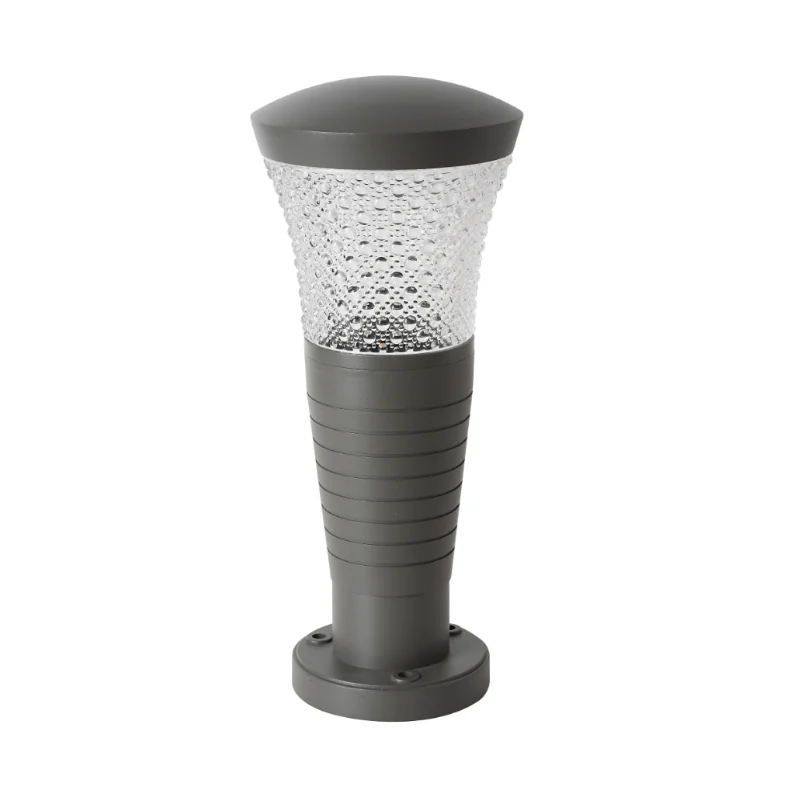
There are scenarios where steel or engineered plastics win: heavy-impact areas where vandal resistance is the priority might call for stainless steel; discrete, low-cost path lighting in sheltered courtyards may use UV-stabilised polycarbonate. For linear runs, extruded aluminium with mechanical fastenings can be simpler to mount. And don’t forget complementary fixtures — well-placed bollard lights and outdoor path lights can reduce overreliance on high-mounted motion lamps by providing low-level illumination that improves visibility and reduces false activations.
Real-world anchor: lessons from coastal installations
Installations along Ireland’s west coast show the difference plainly. Sites near Galway and Howth that used anodised die-cast wall lights reported fewer paint failures and longer seal life during peak storm seasons, compared with units in painted steel. That’s anecdotal, yes — but backed by repeated maintenance records from municipal teams: less corrosion touch-up, fewer replaced sensors. It’s a small dataset, but practical and consistent with materials science on salt-driven corrosion and UV degradation.
Advisory: three golden rules for choosing motion sensor wall lights
1) Specify the right IP and material for the environment: IP65+ and die-cast aluminium with anodizing or quality powder coat for exposed sites. 2) Demand thermal and ingress details: ask for thermal dissipation strategy, driver potting, and proof of silicone gaskets around sensor apertures. 3) Insist on factory-direct QA and first-article testing: verify finish adhesion tests, seal ageing, and a sensor field test on a mounted sample. These three filters will cut down on housing degradation, service calls and whole-life cost.
In the real world, the right choice saves trades time and civic budgets; and — if you want a practical, durable solution that blends control with cost-efficiency — Keyida. –