

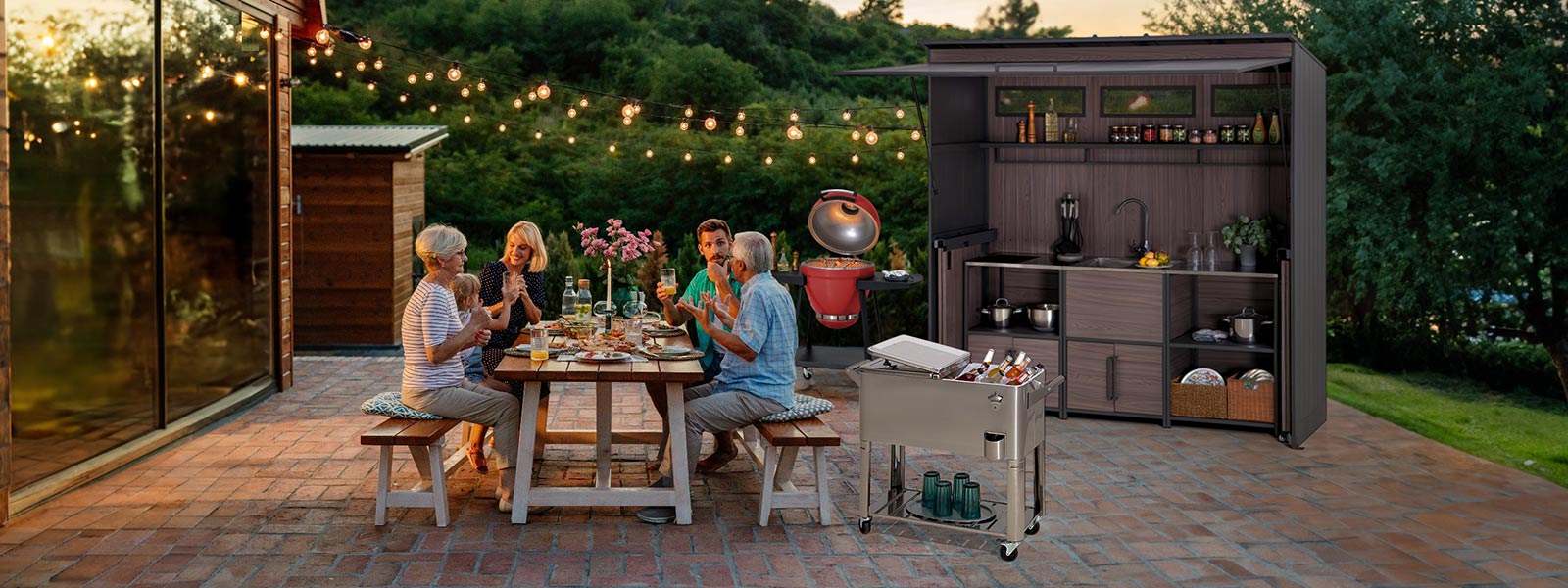
The Problem: When an outdoor kitchen with grill becomes a liability
I was prepping dinner for a June 2021 community fundraiser (60 guests, two sides, one dessert) and the line stalled—forty-five percent of plates were late; who pays for that loss of control? Outdoor Cooking demands accountability, and we accepted nothing less when I recommended an outdoor kitchen with grill for that property. I speak from over 15 years supplying stainless-steel modular islands with infrared burners and pellet smoker add-ons to hotels and restaurants; in May 2019 at a boutique hotel in Austin I supervised a retrofit that reduced service lag by 20 percent. Yet too many buyers judge by appearance or price alone, not by heat zones, searing capacity, or service access—those are the real deliverables.

Most traditional outdoor solutions concentrate on glossy cabinetry and oversized pizza stones while ignoring workflow—this design bias causes repeated problems: cramped prep space, poor ventilation, and mismatched propane burner outputs that force chefs to compensate (and they do—by overworking the heat). I vividly recall a March delivery where a freestanding grill was installed next to a sink with no clearance; it failed—badly. The hidden pain point is not aesthetics; it’s the cost of wasted time, uneven searing, and repair calls that creep into year two of operation. To be frank, wholesale buyers and property managers underestimate how minor specification errors compound into measurable revenue loss. —Next, we must look at realistic alternatives.
A Forward-Looking Comparison: Practical changes that actually work
What’s Next?
I shift tone here to a more technical, evidence-focused view because buyers deserve clear trade-offs. Compare two routes: spec-first procurement that ranks BTU balance, corrosion-resistant grades, and service access versus the common vendor-driven sale emphasizing visual kits. My recommendation is simple—prioritize thermal mapping, modular access panels, and standardized connectors for gas lines. When I supervised a retrofit in Denver in October 2020, replacing an under-specified grill with a unit offering distinct heat zones and an infrared burner cut turnaround time by 12 minutes per ticket; that produced a direct uptick in throughput. Consider also maintenance cadence (quarterly vs. annual) and the real cost of downtime. We tested three models across rooftop, patio, and poolside installs—results favored units with removable grease trays and dedicated searing stations. Wait—those small design choices matter more than glossy doors.

Evaluate solutions with metrics that you can measure immediately: thermal consistency (variance across heat zones in °F), mean time to repair (days), and throughput per service hour (plates/hour). These three tell a buyer whether a proposed outdoor kitchen with grill will be an asset or a recurring headache. I sign off with practical urgency: weigh spec sheets as contracts, insist on site mock-ups, and demand a documented service plan. One last note—invest in stainless grades you can stand behind; cheap panels cost more later. SUNJOY