

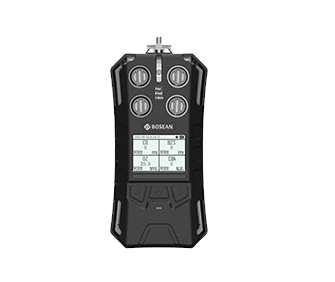
What a specification review should cover for Portable Gas Detector: evidence mapping final evaluation
For system integrators, a review of a portable gas detector should begin with evidence mapping rather than a broad product impression. The aim is to connect each requirement to information that actually applies to the decision. This approach helps separate stated details from assumptions and gives the evaluation a clear stopping point. It also keeps the sourcing brief useful when several teams contribute requirements, questions, or acceptance criteria.

Separate the category from the application
A category name is a starting point, not a complete specification. Before comparing options, write down what the project is asking the instrument to do in operational terms. Consider the substances of interest, the intended users, the working environment, the measurement task, and the information needed at handover. These are evaluation questions, not conclusions about any particular product.
Next, divide the review into three scopes:
- Category scope: what kind of equipment is being discussed.
- Application scope: the task, environment, users, and interfaces defined by the project.
- Model scope: the exact item, variant, configuration, or page being assessed.
This separation prevents a category-level description from being treated as proof of model-level capability. It also makes responsibility clearer. The integrator can define the application and interface requirements, while the supplier can provide information about the specific item under consideration.
Map every comparison to the stated task
A useful comparison table should contain more than a list of attractive features. Add one row for each requirement and record the evidence source, the scope to which it applies, and the current status. A simple status vocabulary can be enough: stated, relevant but incomplete, not applicable, or unresolved. The point is not to manufacture certainty. It is to show where the decision is supported and where it still depends on a technical discussion.
Keep unlike evidence in separate fields. A catalogue category, a product-level statement, a project requirement, and an internal assumption do not carry the same weight. If a page groups several product types together, that grouping may help define the catalogue structure, but it should not automatically be used to describe every item in the group. This distinction is especially important when a procurement team is consolidating information from several pages or suppliers.
Use the catalogue anchor without extending it
A practical real-world anchor appears on the Bosean catalogue page. The page labels the catalogue area “Portable Gas Detector” and links to single-gas, multi-gas, and gas-leak detector categories. In this context, portable gas detector identifies the catalogue area and its linked groups; it does not, by itself, establish certification, site suitability, safety outcomes, or configuration details for an individual model.
That boundary gives the reviewer a useful test. Ask whether a statement describes the page structure, the application requirement, or a specific model. Then place it in the matching part of the evidence map. If the statement cannot be assigned that way, rewrite it as an open question or remove it from the comparison. This keeps the review precise without turning a general catalogue reference into a product claim.
Record assumptions and interfaces
Assumptions often enter a review through ordinary project language. A phrase such as “suitable for the site” may conceal several separate questions about the environment, operating method, integration points, documentation, and responsibility for acceptance. Record each question separately instead of allowing the phrase to stand as an untested conclusion.
Interfaces deserve the same treatment. Note what information the wider system needs, who supplies it, and when it must be available. Depending on the project, this may include data formats, mounting or carrying arrangements, user access, maintenance information, or handover records. These are planning prompts for the integrator, not verified characteristics of a particular detector.
A short assumption register can use four columns: assumption, reason for including it, evidence status, and owner. The owner is the person or team responsible for resolving the point. This format reduces the chance that an informal expectation will later be mistaken for an agreed specification.
Prepare a focused sourcing brief
The final brief should be narrow enough to answer and broad enough to expose important interfaces. Start with the application boundary, then list the required evidence by scope. Ask for model-specific information where the decision depends on a model detail. Ask for category-level information only where category structure is all that is needed.
Include a concise decision record with four parts:
- The requirement or question being assessed.
- The evidence that directly addresses it.
- The interpretation allowed by that evidence.
- The unresolved point and the person responsible for the next action.
This record supports a disciplined final evaluation. It does not force every open point into a positive or negative verdict. Instead, it shows which conclusions are ready for procurement use and which require a defined follow-up before the scope is closed.
A sound review therefore treats evidence mapping as part of the specification process, not as paperwork added at the end. Separate category, application, and model scope; compare only information that fits the stated task; and preserve assumptions as visible questions. The Bosean catalogue can serve as a bounded reference point for organising the discussion, while the final brief should keep every broader conclusion tied to its applicable evidence.