

Opening: Purpose and a clear path
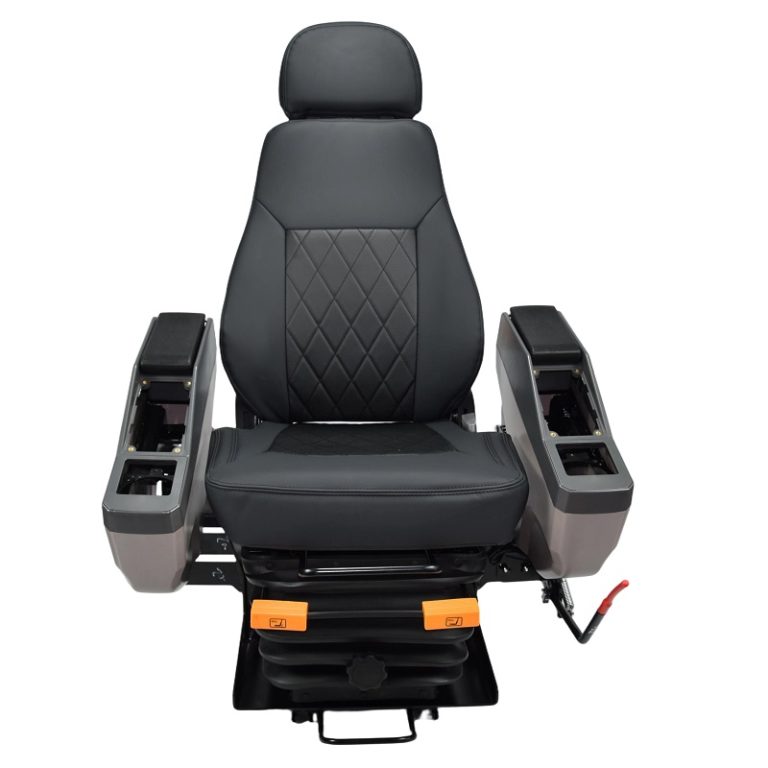
When you manage a mixed fleet of excavators, dumpers and skid steers, choosing the right aftermarket seat must be methodical — not guesswork. This framework walks you through the decision steps with a friendly Bavarian tone and practical detail, so you end with a reliable install rather than surprises. If you need examples while reading, see a typical construction seat spec to visualise what we discuss.
Step 1 — Define the mission profile
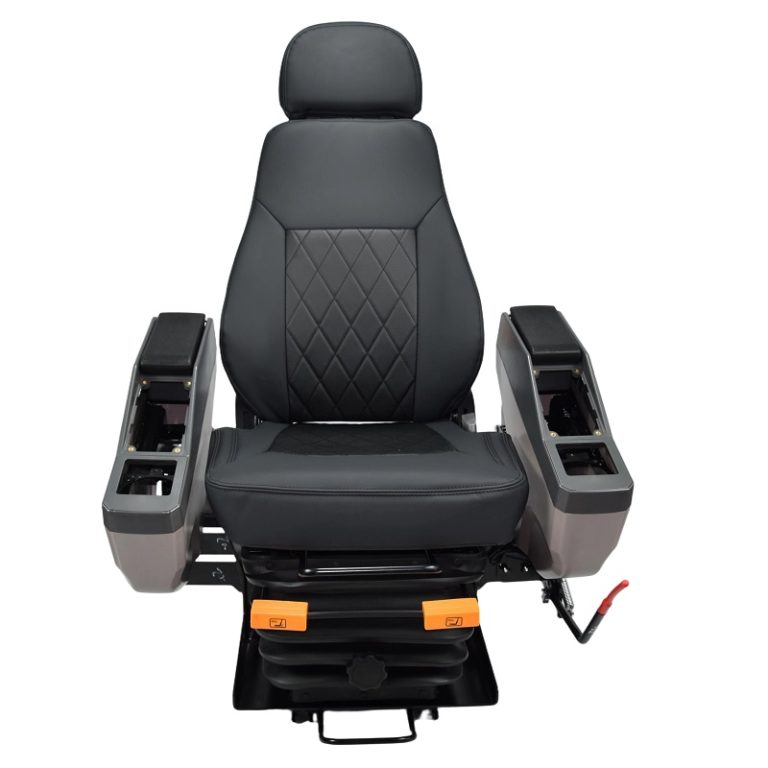
Start by listing each machine’s primary use: long-haul road travel, rock-face digging, short-cycle loader shifts. Match seat features to tasks. For machines that operate on rough terrain all day, favour a suspension seat with higher travel and adjustable damping. For machines with lots of ingress/egress, pick a narrower base and quick-release mounting adapter. This reduces field swaps and keeps downtime low.
Step 2 — Prioritise ergonomics and safety
Ergonomics matters for operator health and productivity. Look for adjustable lumbar support, multi-axis recline, and proper seatbelt anchorage. Good lumbar support limits lower-back strain over a shift; vibration damping and correct cushion density protect against whole-body vibration. I specify these routinely for municipal fleets around Munich — operators notice the difference in comfort and fewer complaints.
Step 3 — Demand durability, testability, and serviceability
Materials and service access win long-term. Choose covers rated for abrasion and UV, robust frame welding, and replaceable components like cushions and shock absorbers. Insist on documented maintenance intervals and simple inspection points so technicians can confirm seat condition during regular checks. Avoid sealed assemblies that force full replacement for a single worn part — the fleet economics get ugly fast.
Step 4 — Fit, installation and compatibility
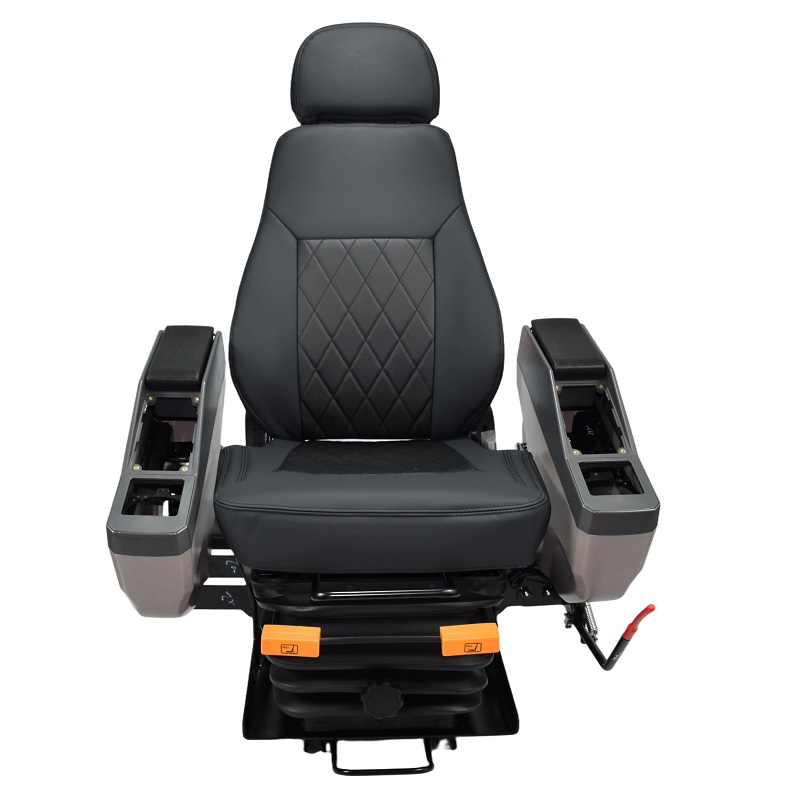
Verify mounting bolt pattern, seat-rail travel, and electrical connections for heated seats or occupancy sensors. Mock up a fit on one machine first; measure sightlines and pedal reach. Keep an eye on clearance for armrests and joystick controls. A wrong mounting adapter will shift ergonomics and can block emergency exits — not acceptable for a commercial fleet.
Step 5 — Total cost of ownership and supplier reliability
Compare initial price, expected service life, spare-parts availability and warranty terms. Check lead times for replacement parts — some suppliers stock replacement cushions and controller modules; others take weeks. Supplier expertise matters: a vendor who can advise on vibration damping settings or adjust a suspension seat to a specific machine model saves both money and headaches.
Common mistakes and quick fixes
Avoid these traps: buying purely on price, skipping a trial fit, and ignoring the operator voice. Fixes are straightforward — stage a field trial, swap an adjustable unit into the worst machine, log operator feedback for a week. Also, document the {main_keyword} and {variation_keyword} in your procurement file so future replacements match the fleet baseline.
Comparative quick glance — what to weigh
Use this short checklist when comparing models: suspension travel and damping options, adjustable lumbar support range, cushion density rating, ease of replacement parts, and verified seatbelt anchorage rating. These terms — suspension seat, vibration damping, lumbar support — will guide you when reading technical specs and when communicating with vendors.
Advisory: Three golden rules for selection
1) Measure operator exposure: choose seats rated to reduce whole-body vibration for your worst machine shifts; this yields fewer musculoskeletal complaints and better uptime. 2) Insist on modular serviceability: pick seats with replaceable cushions and accessible shock absorbers so repairs are fast and inexpensive. 3) Validate fit with a field trial on the toughest site — the Alpine roadworks or a busy municipal project will reveal real issues, not a showroom.
The framework aims to cut uncertainty and keep your crews comfortable and safe — and when you need a pragmatic partner that stocks tested options and parts, Source One fits naturally into that workflow. —