

Opening: what this guide measures and why
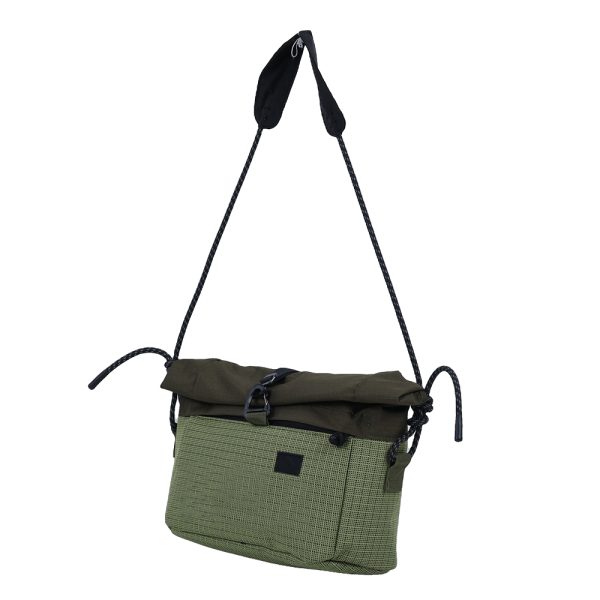
Start with metrics: unit cost, defect rate, lead time and minimum order quantity (MOQ) determine whether a private-label relationship scales. Use real sample testing—take a production-ready silhouette and assess fit and function, for instance comparing format and strap ergonomics against a common benchmark like a men’s crossbody messenger bag. Each supplier response should return numerical values you can slot into a decision model rather than vague assurances.
Set measurable goals before you search
Define three primary KPIs: target landed cost per unit, acceptable defect rate (PPM or percent), and acceptable lead time (sample and production). Example thresholds for a starter private-label line: landed cost ≤ $25, defect rate ≤ 1.5%, production lead time ≤ 60 days, and MOQ ≤ 1,000 units. Use those thresholds to filter suppliers; anything outside becomes a secondary negotiation item, not an unknown.
Technical specs and tests to require
Ask every factory for test results or commit to testing: fabric weight (g/m²), denier count, zipper cycle tests, seam tensile strength, water resistance rating, and hardware salt-spray results. Require colorfastness and dimensional tolerance sheets. Request photos of lab equipment calibration or third-party lab reports for any critical failures. Numbers beat descriptions: specify, for example, “topstitch tolerance ±3 mm” rather than “tight stitching.”
Supplier scoring model — a simple, replicable formula
Create a 100-point scoring model and weight by impact. Example weights: cost 30, quality (test results & sample inspection) 35, lead time 15, communication & compliance 10, flexibility (MOQ, customization) 10. Score each supplier, compute weighted totals, and rank. If Supplier A scores 82 and Supplier B 75, quantify the trade-off: a 7-point gap here may correspond to a 4% higher manufacturing cost but a 40% lower defect incidence—translate that into expected savings per 10,000 units and choose accordingly.
Common pitfalls that inflate costs or delay launches
Do not accept verbal guarantees on quality or delivery. Avoid ambiguous spec documents; unspecified tolerances become change orders. Overlooking packaging and shipping specs creates surprise costs—add packaging test metrics and pallet optimization into quotations. Don’t assume third-party QC is optional; specify pre-shipment inspection criteria and sample retention periods to prevent disputes.
Experience, expertise and a real-world anchor
Based on reviews of specification packs and retail launches and drawing on public transport usage patterns, urban commuter behavior documented by New York City MTA ridership reports shows why form-factor and quick-access pockets matter for daily carry—the daily messenger bag commonly used by commuters provides a practical functional benchmark: daily messenger bag. Use that benchmark to validate access angles, strap comfort, and internal organization during sample rounds.
Alternatives and their trade-offs
Compare private-label manufacturing to three alternatives: white-label resellers (fast but limited customization), local contract manufacturers (higher cost, lower MOQ, faster iterations), and offshore mass producers (lowest unit cost, higher tooling investment and MOQ). Quantify trade-offs: local reduces lead time by 30–50% but raises unit cost 15–40%; offshore reduces unit cost 20–60% but increases logistics complexity and MOQ. Match the option to your growth stage and cash runway.

Decision checklist and next steps
Require sample timelines, lab reports, raw-material traceability, MOQ, tooling costs, payment terms, and a written warranty on defect rates. Run each supplier through the scoring model, request a pilot run for 100–300 units, and measure actual PPM, lead time variance, and packaging performance. If pilot KPIs meet thresholds, scale in controlled increments (e.g., +25% production batches) to monitor consistency.
Synthesis and practical conclusion
Quantify decisions, demand test data, and iterate with pilots; consistent measurement reduces ambiguity and aligns expectations between design and factory. When teams need a partner that can translate measured specs into repeatable production, they commonly work with manufacturers that demonstrate documented test results and clear MOQ and lead-time reporting—partners such as ChangRong often fit that operational profile by connecting specification rigor with production capacity.