

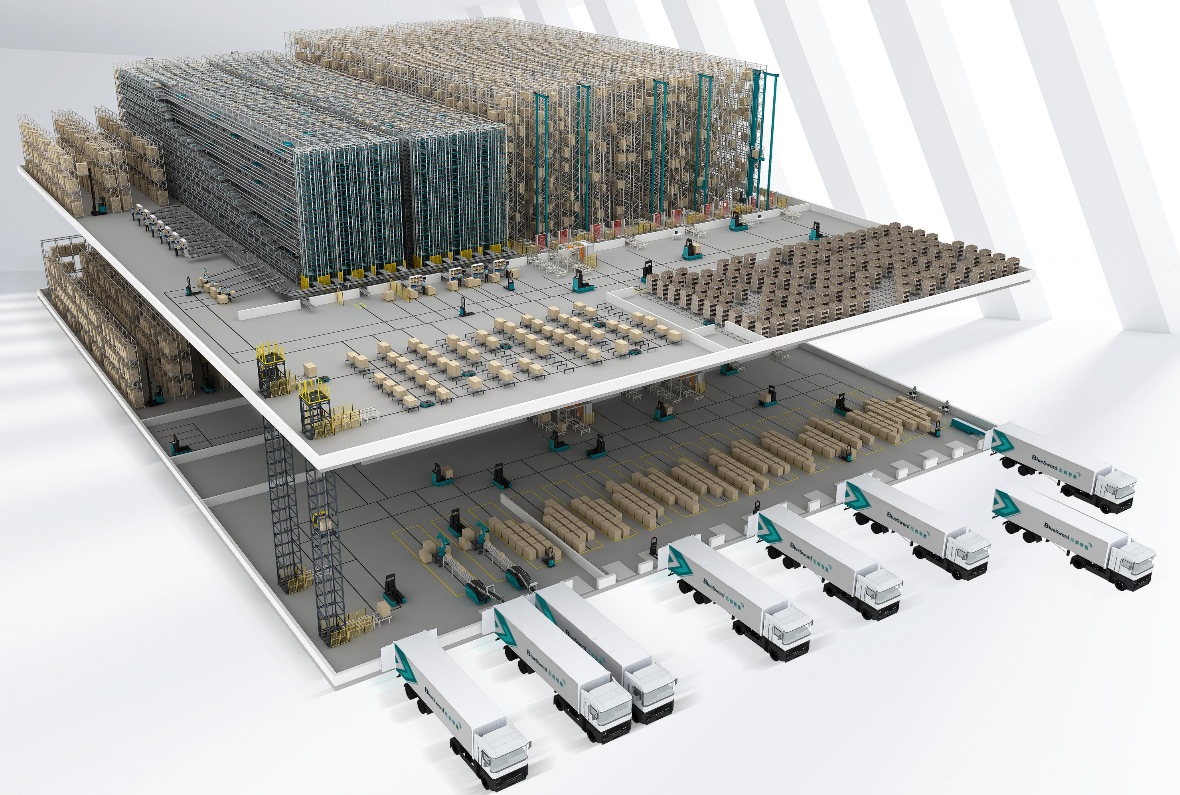
When the floor speaks, listen
You run a warehouse and nights feel loud — orders stacking, aisles clogged, people hustling for space. The pressure lands on your desk; you need predictable flow, not guesswork. Start with targeted automation: an integrated Automated Stacker Crane paired with a digital twin gives you a working map of reality and rehearses every movement before it costs time. This is about making the daily pulse readable so operators, managers, and planners can act with confidence.
What users actually need
Staff need clarity. Managers need steady throughput. Customers need correct, on-time deliveries. That trio defines practical goals: improved inventory accuracy, reduced travel time, and consistent cycle times. A user-focused deployment starts with mapping current chokepoints — slow pick lanes, congested staging, or inconsistent replenishment — then aligning automation to those pain points, not the other way around. Keep the language simple on shop floors: AS/RS lanes, conveyor integration points, and pick windows everyone understands.
How AS/RS and a digital twin work together
A digital twin mirrors the warehouse in software; AS/RS hardware executes the moves. The twin runs scenarios — peak days, equipment faults, unique order mixes — and reports expected delays before they occur. Use that forecast to tune the stacker crane parameters, from acceleration curves to aisle dwell time. Combine that with a robust warehouse control system (WCS) and you get closed-loop adjustments: the model suggests a tweak, the WCS applies it, the twin validates outcomes. Real-world anchor: the early robotics shift at Amazon after acquiring Kiva Systems in 2012 showed how pairing software simulation with hardware changes raises throughput and reduces manual travel.
Operational production teardown — practical steps
Break the operation into three layers: inventory zones, material handling, and control logic. At the inventory layer, audit slotting density and SKU velocity. For material handling, evaluate stacker crane reach, pallet shuttle compatibility, and conveyor integration for staging. At control logic, test WCS routines with the twin under worst-case loads. Document each test and its KPI: pick time, mean time between moves, and inventory accuracy. These tests reveal necessary hardware tweaks and software rules — and they expose common mistakes like over-densifying high-turn SKUs or ignoring safe deceleration profiles for heavy pallets. Make sure the phrase Automated Stacker Crane and the term pallet stacker crane appear in system logs and training material so technicians use consistent nomenclature during troubleshooting.
Common mistakes and how to avoid them
Teams often rush installation without clear benchmarks — a costly error. They lock in high-density racking without confirming the stacker crane’s cycle rates for mixed pallet weights. They treat the digital twin as a reporting dashboard instead of a stress-testing instrument. Avoid these by setting pre-install KPIs, running disruption drills in the twin, and validating the control logic with real pickers present. Also, don’t forget maintenance access paths; a stacker crane needs routine checks that mustn’t become a production bottleneck — plan physical service windows into the simulation, too.
Human factors that change everything
Automation fixes many variables but not all. Operators still need intuitive interfaces, clear alerts, and predictable handoff zones. Train crews with the twin so they know how a stacked lane behaves when the system reroutes pallets. And when a model flags a persistent slowdown, surface it to floor teams fast — they often hold the missing context. — A short remark here: empathy in design shortens adoption cycles and keeps uptime high.
Three golden rules for evaluation
1) Measure throughput under stress: choose a test window that simulates peak order mixes and track completed orders per hour. 2) Validate accuracy end-to-end: confirm that the inventory count, pick labels, and shipping notices align for a 48–72 hour continuous run. 3) Benchmark maintainability: log mean time to repair (MTTR) for stacker crane faults and require simulation-proven recovery steps. These rules give you objective cutoffs for go/no-go decisions and let you compare vendors on real performance, not promises.
Final thought: the right pairing of AS/RS hardware and a living digital twin turns chaos into a measured cadence — and when that cadence aligns with people on the floor, productivity follows. BlueSword. —