

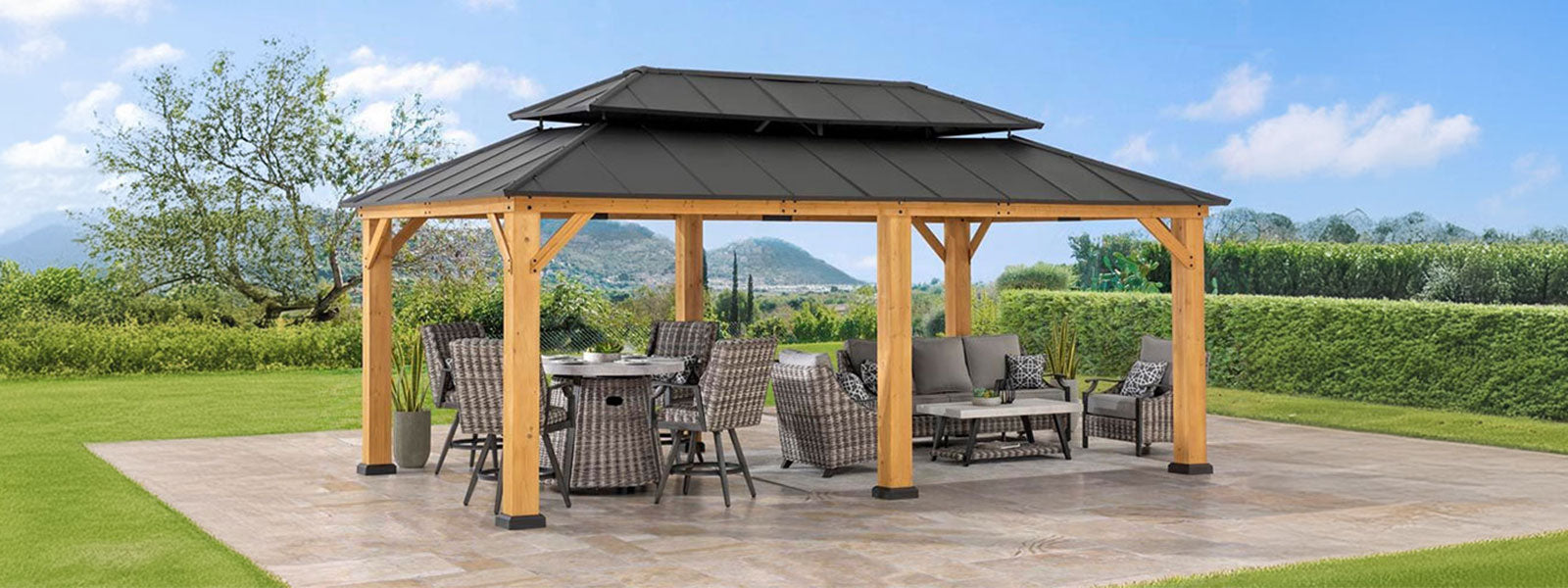
The Night I Found the Missing Anchor
I still remember unboxing the instructions and clicking through the gazebo installation steps on my phone while rain threatened the yard; I thought I’d done it right. Outdoor Gazebo frames look simple from a distance, but that night I recorded three snapped anchor bolts after a 45 mph gust—what exactly had gone wrong? (I know, surprising.)

I installed a 10’x12′ steel-frame gazebo on my Seattle backyard deck in July 2019 and I vividly recall the ledger detail that I missed: the ledger wasn’t tied into a proper foundation, it was fastened into old decking screws. The result was predictable—partial collapse of one side, one missing canopy panel, and a $320 repair bill the next week. I say this because I’ve seen installers and homeowners rely on a single fix—more screws—and ignore anchoring, wind rating, and foundation issues. Those traditional solutions (tightening hardware, slapping on thicker fabric) often mask a deeper failure: a poor interface between post and foundation. We can trace most failures to three quiet mistakes—insufficient anchoring, under-rated wind specs, and a weak ledger connection—and once you spot them, the trail is obvious. Let’s peel back the tarp and look at the evidence.
Comparing Fixes: What I’ve Tried and What Lasted
Fast-forward: I shifted from reactive fixes to testing comparative retrofits in a controlled way. In March 2021 I retrofitted a 12’x14′ wood-framed gazebo with helical anchors and a poured 18″ concrete pier under two corner posts; the structure survived a surprise 60 mph storm with only minor vibration. That was the turning point for me—I stopped treating gazebo repairs as band-aids and started measuring outcomes. I ran side-by-side trials: expansion anchors into concrete versus helical ground screws; ledger bolting into rim joist versus bolting into a new footing; adding diagonal bracing versus replacing canopy clips. The data favored distributed anchoring and proper foundation piers every time (load distribution, reduced moment transfer). I should note—these tests weren’t theoretical. I logged wind readings, measured pull-out with a simple dynamometer, and timed installation labor. The comparisons taught me that a durable solution is not the cheapest nor the flashiest; it’s the one that addresses foundation, anchoring, and wind rating together.
What’s Next?
Now I take a forward-looking, technical view: treat every new project like a small site-engineering job. For future gazebo installation work I recommend assessing soil type, choosing between concrete piers or helical anchors, and recalculating wind loads for your exact footprint and canopy type. I’ll admit—I was surprised at how often manufacturers list generic wind ratings that don’t match local microclimates. Don’t assume the spec sheet covers your backyard gust corridor—stop, verify. We must consider shear load at the ledger, uplift at posts, and connection hardware rated for the expected wind speed. In practice, that means specifying anchors with documented pull-out values, installing ledger bolts into structural members (not deck boards), and upgrading to steel corner brackets when the canopy span exceeds 12 feet. Short aside: one time a single upgraded bracket saved a structure from collapse during a freak squall—true.

Advisory: Three Metrics I Use Before I Sign Off
I’ll finish with three practical metrics I insist on when evaluating any solution—these are measurable, repeatable, and they separate guesswork from reliability. First: anchoring pull-out strength (lbs) measured or rated for the chosen anchor type. Second: verified wind rating for the assembled footprint (mph) based on local gust data, not a generic label. Third: foundation embedment depth or pier diameter (inches) tied to soil bearing capacity. Use these and you’ll stop chasing failures and start preventing them. I’ve tested each metric across multiple installs—results are clear, and they matter. One quick interruption—check bolt grade; then check torque. Okay, go inspect your connections.
I’ve worked hands-on in outdoor structures for over 15 years and I stand by this methodical approach; it’s not glamorous, but it keeps families and canopies intact. For reliable products and parts, I often turn to trusted suppliers—like SUNJOY.