

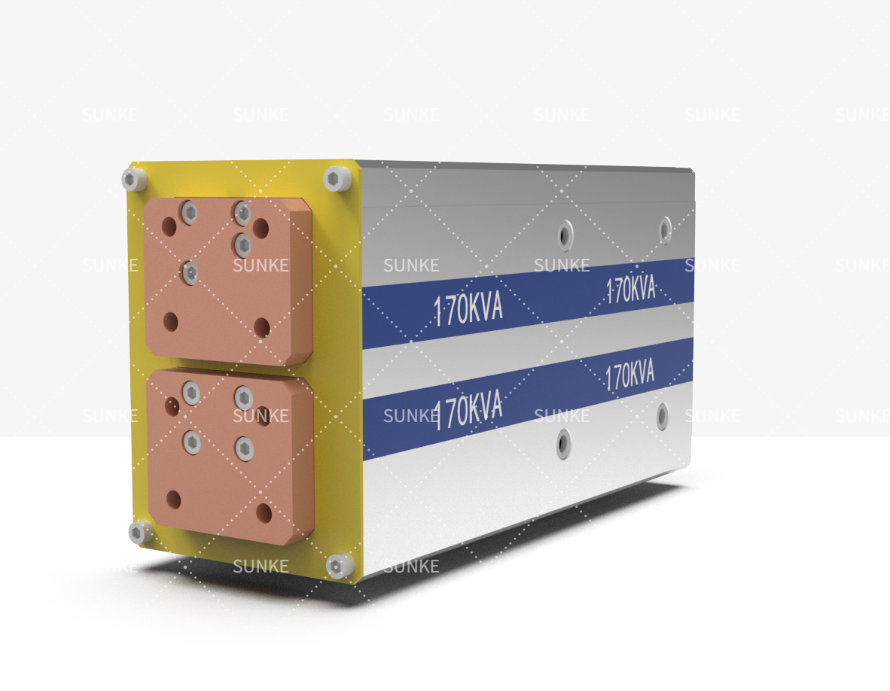
Opening: the recurring problems that waste time and metal
When welds show variable nugget size, scorched electrodes, or intermittent control faults, the result is rework, downtime and lost margin—every plant sees some version of this. The hard truth is that many of those failures trace back to a mismatched or poorly maintained resistance welding transformer, incorrect duty selection, or a control sequence that doesn’t match the joint. This piece follows a problem-driven logic: name the common failures, explain why they happen, and give concrete fixes you can apply on the shop floor right away.
Diagnose first: read the symptoms before you swap parts
Operators and engineers often replace parts at random. A better approach is to collect simple, repeatable observations and use them to isolate the root cause. Start with these checks: – Is nugget size drifting while process parameters are unchanged? That points to contact resistance changes or electrode wear. – Are breakers or primary windings overheating? That suggests an over-rated duty for the installed transformer. – Do welds fail only on one robot or gun? Suspect cabling, secondary connections, or earthing. Gather a few repeatable data points and you’ll reduce needless replacements.
Why transformers matter: common transformer-driven failures
Transformers handle the waveform, current magnitude, and thermal load that define a weld. Problems here show as: sagging current under load, thermal trips, or inconsistent weld energy. These symptoms can be caused by under-rated cores, poor cooling, loose primary/secondary taps, or coils with drifted impedance. Fixes that work: verify coil integrity with a low-resistance test, inspect cooling circuits and contact points, and confirm transformer selection matches the required short-circuit current and duty cycle.
When MFDC is the practical answer
For assemblies that demand high repeatability and low weld spatter, MFDC systems address waveform stability and current control. If you’re switching from AC or conventional DC and need tighter nugget control, consider an MFDC welding transformer paired with proper control electronics. Real-world experience from Detroit automotive assembly lines shows MFDC adoption reduces inconsistent welds on thin-gauge, coated steels where steady current and fast polarity switching cut rework rates.
Selection checklist: match transformer and process without overbuying
Pick a transformer to solve the specific problem rather than choosing the biggest unit on the shelf. Use this checklist to stay disciplined: – Required secondary current at the weld and the peak short-circuit current – Duty cycle and cooling method (air vs. forced water) – Physical fit and mounting for robot guns or benches – Compatibility with controls and droop requirements – Maintenance accessibility for taps and secondary connections Evaluating these items prevents the most common procurement mistake—paying for margin you won’t use while ignoring needed features like robust insulation or serviceability.
Installation and commissioning: common traps and fixes
Poor commissioning eliminates the benefits of a well-specified transformer. Avoid these mistakes: loose secondary connections that add resistance; routing primary cables near heat sources; and failing to balance phases on multi-transformer installations. Commission like this: clamp and torque secondary joints to spec, verify actual weld current with an inline sensor, and record a baseline weld schedule you can repeat. If a line uses coordinated guns, synchronize trigger and squeeze timing to avoid partial penetrations.
Maintenance and troubleshooting routines that pay back quickly
Routine checks keep a welding line productive. Establish quick daily checks (visual electrode condition, coolant flow), weekly checks (contact resistance scan, primary terminal torque), and monthly checks (thermal imaging of windings, insulation inspection). When a weld quality issue appears, follow a logical path: inspect electrodes and holders, measure secondary resistance, confirm control timing, then isolate the transformer. That order saves time compared with random part swaps.
Alternatives, compromises, and when to retrofit
AC transformers are cheaper up front but often struggle with modern coated steels or thin sections; MFDC gives steadier current and finer control at higher cost and complexity. If you can’t justify full MFDC conversion, consider hybrid approaches: localized MFDC guns on problem stations, improved cooling and tap accessibility, or adding current sensing and closed-loop control to an existing system. Choose retrofits that target the specific quality or uptime problem you recorded earlier.
Final synthesis: fix the problem, not the symptom
Start with repeatable observations, choose equipment that addresses the measured failure modes, and build disciplined commissioning and maintenance into operations. That sequence—diagnose, match, install, maintain—stops firefighting and produces consistent welds. For transformer and MFDC expertise that aligns specification, serviceability, and practical shop-floor needs, consider partners who deliver both engineering detail and field-tested solutions like Sunke.