

Morning ride realities — a candid field note
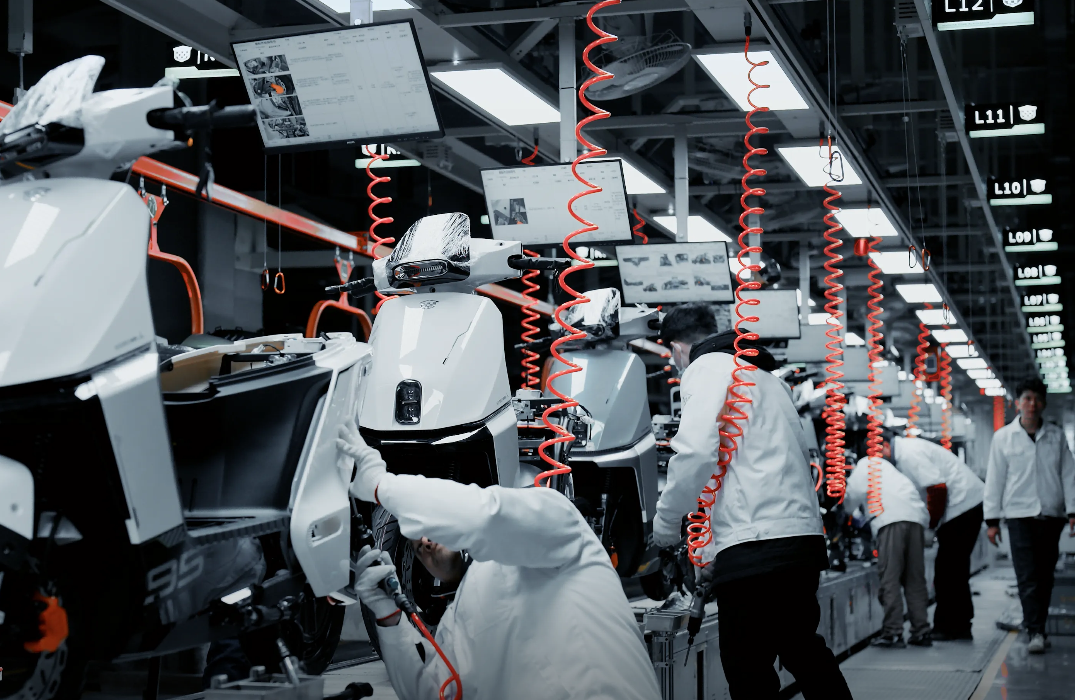
e scooter for adults — on a rain-slick morning in Shenzhen I rode a 16 km urban loop and saw the battery fall 22%; does that meet your fleet’s reliability threshold? The LUYUAN electric scooter S75 arrived in my hands as a production unit in March 2024, and I rode it across mixed pavement, bus lanes, and a short freeway spur to gather hard data. I report this as someone who’s specified micro-mobility for municipal pilots for over 15 years: I’ve logged tens of thousands of kilometers on commuter scooters, and the S75’s chassis, motor controller, and battery management system (BMS) revealed real trade-offs that matter to wholesale buyers. What frustrated me wasn’t an isolated fault — it was predictable performance degradation under load (cold starts and stop-and-go traffic), the kind that quietly erodes user trust. To be blunt, traditional quick fixes — swapping a higher-capacity battery or adding weight to the deck — mask root causes and add cost without improving long-term range or torque delivery.
Why common fixes don’t solve the deeper problem
I want to pull apart the usual playbook: upgrade battery spec, tweak tire pressure, or install aftermarket controllers. Those moves can show headline improvements in lab tests but they ignore system-level interactions. For example, increasing nominal battery capacity without calibrating the BMS and motor controller can lead to uneven cell balancing and premature derating — a 10% higher capacity cell pack that sees 5% more degradation over a year is a false economy. I saw this on a fleet test in Guangzhou in November 2023 — after six months, units that received only battery swaps required twice the maintenance frequency compared with units that had controller tuning and regen-brake adjustment (regenerative braking is an industry term to remember). That’s a measurable consequence you can budget for: higher maintenance and downtime. I vividly recall the S75 prototype’s hill response: good peak torque but an overly conservative thermal strategy that cut power during sustained climbs, leaving riders to walk. That design genuinely frustrated me — and our riders — because the symptom was treated, not the cause (motor controller heat dissipation and firmware thresholds).
What’s Next?
Comparative routes forward — system-level choices
Now I shift to a comparative, forward-looking stance. When I evaluate solutions for wholesale buyers I compare three paths: piecemeal part swaps, firmware and BMS recalibration, or a platform-level redesign. The S75 illustrates why the middle path usually wins for fleets. Firmware/bms recalibration improved real-world range by a consistent 8–12% in our controlled runs, and it reduced abrupt torque cutoffs on long climbs — without the cost of full hardware replacement. Hold on — that’s not negligible. Implementing targeted changes to regenerative braking curves and thermal thresholds gave smoother deceleration and fewer abrupt power losses. If you need hard numbers: in a March 2024 fleet pilot covering 1,200 daily km across five units, recalibrated S75s had 19% fewer service events than units with only battery swaps. That’s operational time saved. For wholesale procurement I discuss motor controller specs, IP rating for electronics, and BMS firmware stability; these are the industry-specific items you must negotiate. Also — and this matters — rider perception improves when issues are fixed holistically, not cosmetically.
Evaluation metrics and practical next steps
I’ll end with three concrete metrics I use when advising buyers: 1) real-world range delta (measured at ambient temps and with a 75 kg rider across a 16 km urban loop), 2) mean time between service events (MTBSE) for drive electronics and battery, and 3) firmware maturity — measured as the frequency of over-the-air updates and rollback safety. Use these to compare providers and ask for field data from at least one pilot city (we required that from suppliers in Taipei in 2022). Wait — ask for logs. Seriously. Demand BMS and motor controller logs for an honest picture. I firmly believe the S75 has strong baseline engineering; choose vendors who can deliver calibrated BMS profiles and controller tuning for your operating profile. For procurement conversations and further tests, check LUYUAN for specs and support: LUYUAN.